|
Case Report
A large androgen-producing ovarian mass presenting with progressive virilization in a young woman
1 Department of Gynecology and Obstetrics, Unidade Local de Saúde do Alto Minho, Viana do Castelo, Portugal
2 Department of Gynecology and Obstetrics, Instituto Português de Oncologia do Porto, Porto, Portugal
Address correspondence to:
Maria Rui Torres
Unidade Local de Saúde do Alto Minho, Rua Dr. Elisiário Monteiro Nº81, Póvoa de Varzim,
Portugal
Message to Corresponding Author
Article ID: 100240Z08MT2026
Access full text article on other devices

Access PDF of article on other devices

How to cite this article
Torres MR, Gomes MS, Pires MC. A large androgen-producing ovarian mass presenting with progressive virilization in a young woman. J Case Rep Images Obstet Gynecol 2026;12(2):28–31.ABSTRACT
Introduction: Sertoli–Leydig cell tumors (SLCT) are rare ovarian sex cord–stromal neoplasms that may produce androgens and cause progressive virilization. Recognition of this clinical presentation is important for establishing an early diagnosis and guiding appropriate treatment in young women.
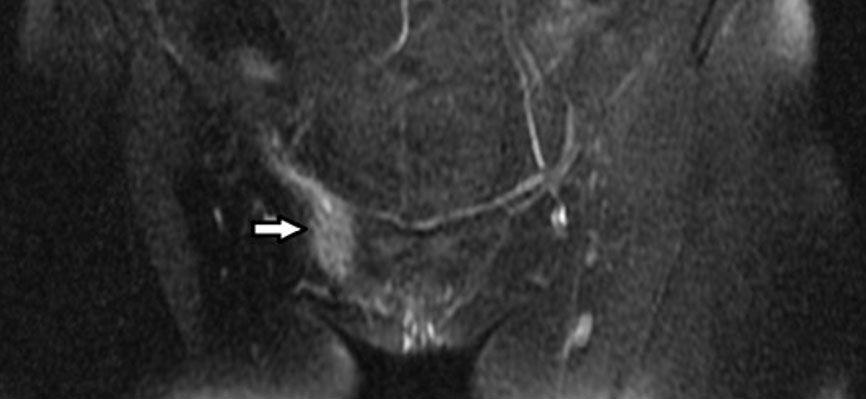
Case Report: A 23-year-old nulligravid woman presented with progressive abdominal enlargement and marked hirsutism over 12 months. Her menstrual cycles were regular, and she denied other symptoms suggestive of hyperandrogenism, including acne and alopecia. Physical examination revealed marked virilization and a large abdominopelvic mass. Imaging demonstrated a predominantly solid right ovarian mass measuring approximately 20 × 15 × 10 cm. Total and free testosterone were markedly elevated at 517 and 1.94 ng/dL, respectively, while DHEA-S, 17-hydroxyprogesterone and cortisol were within normal limits; other tumor markers, including CA-125, were also unremarkable. The patient underwent right adnexectomy with omentectomy and peritoneal cytological analysis by laparotomy. Histopathological examination confirmed a moderately differentiated SLCT, International Federation of Gynecology and Obstetrics (FIGO) stage IA, with no lymphovascular invasion and negative peritoneal cytology. Molecular analysis identified two pathogenic/probably pathogenic somatic DICER1 variants. The patient remained under clinical surveillance for more than three years, with no evidence of disease recurrence.
Conclusion: Sertoli–Leydig cell tumors should be considered in young women presenting with progressive virilization and an ovarian mass. Early recognition of androgen excess may facilitate diagnosis and allow fertility-sparing treatment in selected patients with early-stage disease.
Keywords: Hirsutism, Ovarian neoplasm, Sertoli–Leydig cell tumor, Virilization
SUPPORTING INFORMATION
Acknowledgments
The authors thank the Departments of Gynecology, Radiology, Pathology of IPO-Porto and Medical Genetics for their multidisciplinary contribution.
Author ContributionsMaria Rui Torres - Substantial contributions to conception and design, Acquisition of data, Interpretation of data, Drafting the article, Final approval of the version to be published
Marina Sousa Gomes - Substantial contributions to conception and design, Revising it critically for important intellectual content, Final approval of the version to be published
Monica Cruz Pires - Substantial contributions to conception and design, Revising it critically for important intellectual content, Final approval of the version to be published
Guaranter of SubmissionThe corresponding author is the guarantor of submission.
Source of SupportNone
Consent StatementWritten informed consent was obtained from the patient for publication of this article.
Data AvailabilityAll relevant data are within the paper and its Supporting Information files.
Conflict of InterestAuthors declare no conflict of interest.
Copyright© 2026 Maria Rui Torres et al. This article is distributed under the terms of Creative Commons Attribution License which permits unrestricted use, distribution and reproduction in any medium provided the original author(s) and original publisher are properly credited. Please see the copyright policy on the journal website for more information.