|
Case Report
Anti-GD1b and anti-GM1 positive, acute inflammatory demyelinating polyneuropathy associated with advanced ovarian carcinoma: A case report
1 Emergency Department, CHUV – Centre Hospitalier Universitaire Vaudois, Lausanne, Switzerland
2 Center of Gynecological Tumors, Oncology Department, CHUV – Centre Hospitalier Universitaire Vaudois, Lausanne, Switzerland
3 Director of Neuro-Oncology Unit, CHUV – Centre Hospitalier Universitaire Vaudois, Lausanne, Switzerland
4 Responsible of Center of Gynecological Tumors, Oncology Department, CHUV – Centre Hospitalier Universitaire Vaudois, Lausanne, Switzerland
Address correspondence to:
Aikaterini Liapi
Center of Gynecological Tumors, Oncology Department, CHUV – Centre Hospitalier Universitaire Vaudois, Lausanne, Rue du Bugnon 46, 1011, Lausanne,
Switzerland
Message to Corresponding Author
Article ID: 101195Z01JF2021
Access full text article on other devices

Access PDF of article on other devices

How to cite this article
Frutiger J, Liapi A, Hastir D, Hottinger A, Sarivalasis A. Anti-GD1b and anti-GM1 positive, acute inflammatory demyelinating polyneuropathy associated with advanced ovarian carcinoma: A case report. Int J Case Rep Images 2021;12:101195Z01JF2021.ABSTRACT
Introduction: Paraneoplastic neurological syndromes (PNSs) are mostly associated with non-epithelial ovarian cancers. We report the case of an advanced high-grade serous ovarian adenocarcinoma, diagnosed during the etiological investigation of a subacute motor-sensory axonal neuropathy variant (AMSAN) of Guillain-Barré syndrome (GBS). According to our literature review, only a single case-control study described a positive association between GBS and cancer.
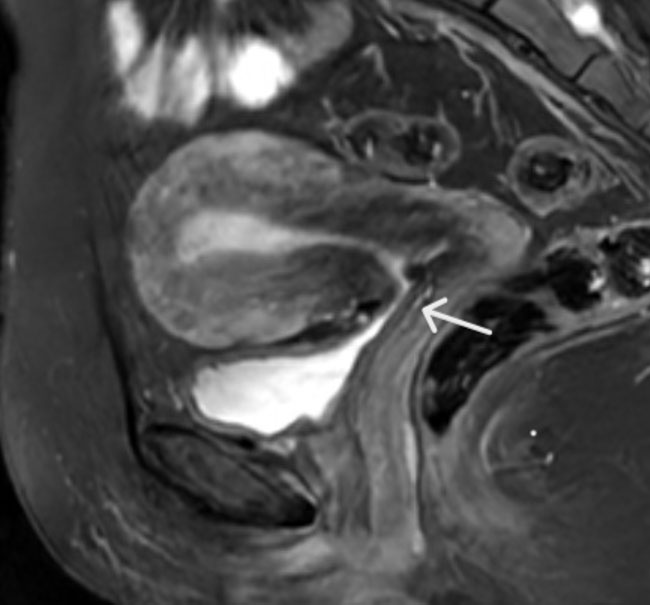
Case Report: A 73-year-old woman was admitted to the emergency department for a progressive symmetrical distal tetraparesis, associated with hypoesthesia and abdominal pain. There was no sign of viral or bacterial infection. Over a period of 10 days, she presented a rapid neurological deterioration with nearly complete paralysis of all extremity, facial, and respiratory muscles. The laboratory testing ruled out active infection but the computed tomography (CT) scanner described diffuse peritoneal carcinomatosis, associated with bilateral ovarian tumors. Laparoscopic biopsies confirmed a high-grade serous ovarian cancer. Cerebrospinal fluid analysis confirmed the presence of elevated protein with a normal white blood cell count and anti-ganglioside autoantibodies anti-GD1b and anti-GM1. The patient received systemic chemotherapy together with plasmapheresis and intravenous immunoglobulins, and she experienced a rapid neurological recovery and long-term tumor remission.
Conclusion: Neurological paraneoplastic syndromes are rarely associated with epithelial ovarian cancer. Cerebellar ataxia is most frequently associated with this cancer type. Guillain-Barré syndrome can rarely be associated with high-grade serous ovarian cancer. It can delay the tumor diagnosis and treatment. In the case of our patient, early supportive and etiological treatment was of paramount importance for the complete recovery of our patient.
Keywords: Antiganglioside autoantibodies, Guillain-Barré, High-grade serous ovarian cancer, Paraneoplastic syndrome
SUPPORTING INFORMATION
Author Contributions
Julie Frutiger - Substantial contributions to conception and design, Acquisition of data, Analysis of data, Interpretation of data, Drafting the article, Final approval of the version to be published
Aikaterini Liapi - Acquisition of data, Analysis of data, Interpretation of data, Drafting the article, Revising it critically for important intellectual content, Final approval of the version to be published
Delfyne Hastir - Analysis of data, Interpretation of data, Revising it critically for important intellectual content, Final approval of the version to be published
Andreas Hottinger - Analysis of data, Interpretation of data, Revising it critically for important intellectual content, Final approval of the version to be published
Apostolos Sarivalasis - Substantial contributions to conception and design, Analysis of data, Interpretation of data, Revising it critically for important intellectual content, Final approval of the version to be published
Guaranter of SubmissionDr. Apostolos Sarivalasis is the guarantor of submission.
Source of SupportNone
Consent StatementWritten informed consent was obtained from the patient for publication of this article.
Data AvailabilityAll relevant data are within the paper and its Supporting Information files.
Conflict of InterestAuthors declare no conflict of interest.
Copyright© 2021 Julie Frutiger et al. This article is distributed under the terms of Creative Commons Attribution License which permits unrestricted use, distribution and reproduction in any medium provided the original author(s) and original publisher are properly credited. Please see the copyright policy on the journal website for more information.