|
Case Report
Intravenous immunoglobulin therapy in the management of recurrent pregnancy loss: A case of successful pregnancy outcome in a woman with a history of 23 consecutive miscarriages
1 Maternal Fetal Medicine Fellow, King Abdulaziz Medical City, National Guard Health Affairs, Riyadh, Saudi Arabia
2 Resident in Obstetrics and Gynecology, King Abdulaziz Medical City, National Guard Health Affairs, Riyadh, Saudi Arabia
3 Consultant at the Department of Maternal Fetal Medicine, King Abdulaziz Medical City, National Guard Health Affairs, Riyadh, Saudi Arabia
Address correspondence to:
Wafa Alshahrani
Resident in Obstetrics and Gynecology, King Abdulaziz Medical City, National Guard Health Affairs, Riyadh,
Saudi Arabia
Message to Corresponding Author
Article ID: 100234Z08HA2026
Access full text article on other devices

Access PDF of article on other devices


How to cite this article
Alblewi H, Alshahrani W, Alsheikh M. Intravenous immunoglobulin therapy in the management of recurrent pregnancy loss: A case of successful pregnancy outcome in a woman with a history of 23 consecutive miscarriages. J Case Rep Images Obstet Gynecol 2026;12(2):1–4.ABSTRACT
Introduction: Recurrent pregnancy loss (RPL) is defined as two or three consecutive miscarriages and requires further investigations and management. Many causes such as genetic factors, immunological disturbances, anatomical abnormalities, and thrombophilia have been linked to cases of RPL. Multiple studies have investigated the outcomes of different treatment including Intravenous immunoglobulin (IVIG).
Case Report: We are presenting a case of woman with 23 consecutive pregnancy loss who was treated with IVIG during her pregnancy. The patient delivered at 34 weeks with no complications and discharged from the hospital in stable condition.
Conclusion: Further studies need to be conducted to establish the role of IVIG infusion in the treatment of patient with recurrent pregnancy loss.
Keywords: Consecutive abortions, Intravenous immunoglobulin, IVIG, IVIG with recurrent pregnancy loss, Management of recurrent pregnancy loss, Recurrent pregnancy loss
Introduction
Recurrent pregnancy loss (RPL) is defined as two or three consecutive abortions, affecting up to 5% of couples who are trying to conceive [1],[2]. Causes of RPL can be multifactorial including genetic, immunological, anatomical, or hematological factors [3]. Fetal aneuploidies are the most common causes of early recurrent pregnancy losses [1]. As for hematological causes, elevated levels of factor VIII have been associated with RPL [4]. Immunological causes of recurrent pregnancy loss include inflammatory immune responses in addition to increase in the number of natural killer cells (NK cells) as well as imbalanced ratio between the Th1/Th2 cells in the peripheral blood [3]. Psychological complications of RPL include anxiety, depression, and post-traumatic stress disorder on both partners [4]. Some of the treatment strategies include giving women with RPL low doses of Aspirin and enoxaparin during pregnancy. Surgical options include laparoscopic abdominal cerclage which is done to patient with cervical insufficiency [5].
The Role of Intravenous Immunoglobulin (IVIG) in RPL Management
Intravenous immunoglobulin infusion has gained attention in the treatment of RPL as multiple studies showed positive pregnancy outcomes where immune factors were suspected to cause RPL. A review of well controlled trials showed four out of ten studies showing increase in the rates of live births when IVIG was used [5]. In addition, as of today, no maternal or fetal risks were noted after the administration of IVIG in any of the published research [5].
Furthermore, the immune modulating effect of IVIG has been emphasized in patient with abnormal immune cell response [6]. It was noted that IVIG infusion reduces the effect of elevated levels of CD3, CD56, and natural killer cells leading to a successful pregnancy outcome [5]. It was recommended for the IVIG infusion to be started prior to conception in patients with RPL and in cases of elevated natural killer cell or elevated Th1/Th2 ratio. Studies have also suggested that IVIG infusion can modulate the immune cell response during pregnancy by regulating the T cells frequency and function [6]. Moreover, a reduction in the risk of fetal demise related to severe and early onset of alloimmunization was noted with IVIG infusion [7]. All these findings have showed a significant role of IVIG infusion in cases of RPL, however, well-controlled clinical trials are needed to assess the safety and efficacy of the protocol.
Case Report
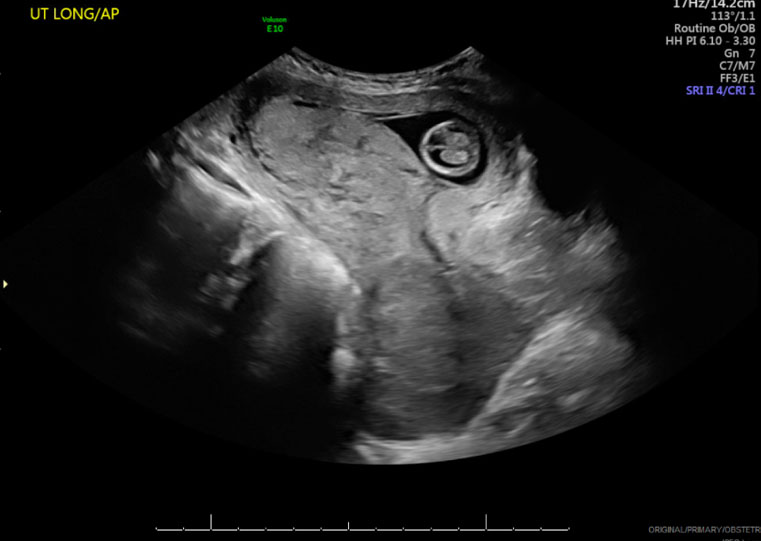
A 42-year-old woman, gravida 24 para 0, with history of 23 consecutive abortions, presented to our maternal fetal medicine clinic for investigation regarding recurrent fetal loss. Her medical and surgical history was unremarkable. Anatomical and genetic causes of recurrent pregnancy loss were ruled out through investigations. However, immunological causes were still debatable.
Treatment options were discussed thoroughly with the patient and she was started on a weekly regimen of 1 mg per kg of IVIG in addition to prednisolone 5 mg and hydroxychloroquine 500 mg daily. The patient had weekly follow-ups during her entire pregnancy.
The pregnancy follow-ups were uneventful. The patient was delivered via an elective caesarean section at 34 weeks. Both baby and mother were discharged from the hospital in stable condition.
Discussion
Safety and Effectiveness of IVIG in Pregnancy
The infusion of IVIG is still a critical concern as its safety is not yet guaranteed and is mainly used as off label in cases of RPL, fetal, or neonatal alloimmune thrombocytopenia (FNAIT), and implantation failure. Several studies have demonstrated a regulation in the immune cell response, mainly T cells, in patients with RPL due to immunological factors [4].
There were concerns regarding the off-label usage of IVIG in cases in which patients are at risk of developing FNAIT as the potential immunostimulatory or immunosuppressive on the fetal immune system was not clear [7]. Moreover, concerns have been raised about the extrapolation of evidence from non-pregnant populations with immune thrombocytopenia (ITP) to pregnancy, given the lack of sufficient data regarding IVIG’s use in pregnancy [8],[9]. Additionally, doubts have been raised regarding the effectiveness of IVIG in treating severe hemolytic disease of the fetus and newborn (HDFN), with some researchers calling for more targeted investigations into its indications and true effects in these contexts [8].
Despite all these risks, multiple studies demonstrated positive pregnancy outcomes including an increase in the rates of live birth with IVIG infusion [6]. Thus, the usage of IVIG infusion in case of RPL is still off labeled and the evidence of potential benefits cannot be ignored, and further studies are recommended to assess its safety of both, mother and the fetus.
Conclusion
In conclusion, although the IVIG infusion in pregnancy remains controversial and requires further well-controlled studies, published evidence of its role in improving the outcomes of patient with RPL is promising. Further well-established randomized controlled trials are crucial to clarify its safety, establish a treatment protocol, and determine the patients who would benefit the most from IVIG therapy.
REFERENCES
1.
Sierra S, Stephenson M. Genetics of recurrent pregnancy loss. Semin Reprod Med 2006;24(1):17–24. [CrossRef]
[Pubmed]

2.
Udry S, Aranda FM, Latino JO, de Larrañaga GF. Paternal factor V Leiden and recurrent pregnancy loss: A new concept behind fetal genetics? J Thromb Haemost 2014;12(5):666–9. [CrossRef]
[Pubmed]
3.
Kwak-Kim J, Park JC, Ahn HK, Kim JW, Gilman-Sachs A. Immunological modes of pregnancy loss. Am J Reprod Immunol 2010;63(6):611–23. [CrossRef]
[Pubmed]
4.
Han AR, Lee SK. Immune modulation of i.v. immunoglobulin in women with reproductive failure. Reprod Med Biol 2018;17(2):115–24. [CrossRef]
[Pubmed]
5.
Jafarzadeh S, Ahmadi M, Dolati S, Aghebati-Maleki L, Eghbal-Fard S, Kamrani A, et al. Intravenous immunoglobulin G treatment increases live birth rate in women with recurrent miscarriage and modulates regulatory and exhausted regulatory T cells frequency and function. J Cell Biochem 2019;120(4):5424–34. [CrossRef]
[Pubmed]
6.
Jafarzadeh S, Ahmadi M, Dolati S, Aghebati-Maleki L, Eghbal-Fard S, Kamrani A, et al. Increased regulatory T cells in recurrent pregnancy loss following treatment with intravenous immunoglobulin. American Journal of Reproductive Immunology 2018;80(5):e13064.
7.
Winkelhorst D, Murphy MF, Greinacher A, Shehata N, Bakchoul T, Massey E, et al. Antenatal management in fetal and neonatal alloimmune thrombocytopenia: A systematic review. Blood 2017;129(11):1538–47. [CrossRef]
[Pubmed]
8.
Zwiers C, Lindenburg ITM, van Kamp IL, Oepkes D, Klumper FJCM, van der Bom JG, et al. The role of intravenous immunoglobulin in pregnancies at risk for hemolytic disease of the fetus and newborn. Transfusion Medicine Reviews 32(4):233–41.
9.
Sun D, Shehata N, Ye XY, Gregorovich S, De France B, Arnold DM, et al. Evidence for intravenous immunoglobulin in immune thrombocytopenia: A systematic review of efficacy and safety. British Journal of Haematology 2016;175(1):18–28.
SUPPORTING INFORMATION
Author Contributions
Hedaya Alblewi - Conception of the work, Design of the work, Acquisition of data, Drafting the work, Final approval of the version to be published, Agree to be accountable for all aspects of the work in ensuring that questions related to the accuracy or integrity of any part of the work are appropriately investigated and resolved.
Wafa Alshahrani - Analysis of data, Revising the work critically for important intellectual content, Final approval of the version to be published, Agree to be accountable for all aspects of the work in ensuring that questions related to the accuracy or integrity of any part of the work are appropriately investigated and resolved.
Mohammed Alsheikh - Revising the work critically for important intellectual content, Final approval of the version to be published, Agree to be accountable for all aspects of the work in ensuring that questions related to the accuracy or integrity of any part of the work are appropriately investigated and resolved.
Guaranter of SubmissionThe corresponding author is the guarantor of submission.
Source of SupportNone
Consent StatementWritten informed consent was obtained from the patient for publication of this article.
Data AvailabilityAll relevant data are within the paper and its Supporting Information files.
Conflict of InterestAuthors declare no conflict of interest.
Copyright© 2026 Hedaya Alblewi et al. This article is distributed under the terms of Creative Commons Attribution License which permits unrestricted use, distribution and reproduction in any medium provided the original author(s) and original publisher are properly credited. Please see the copyright policy on the journal website for more information.