|
Case Series
Flexible cystoscopy and vaginoscopy: A case series on assisted endometrial biopsy to overcome anatomic barriers
1 Department of Obstetrics & Gynecology, Jersey City Medical Center, 355 Grand Street, Jersey City, NJ 07302, USA
Address correspondence to:
Alexa L Walsh
Department of Ob-stetrics & Gynecology, Jersey City Medical Center, 355 Grand Street, Jersey City, NJ 07302,
USA
Message to Corresponding Author
Article ID: 100203Z08AW2025
Access full text article on other devices

Access PDF of article on other devices

How to cite this article
Walsh AL, Salmen N, Bruck L. Flexible cystoscopy and vaginoscopy: A case series on assisted endometrial biopsy to overcome anatomic barriers. J Case Rep Images Obstet Gynecol 2025;11(1):73–76.ABSTRACT
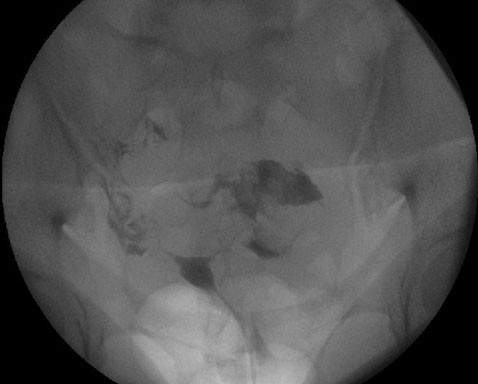
This case series explores an innovative technique for endometrial sampling in patients facing anatomical challenges, such as cervical stenosis and morbid obesity, which often hinder traditional methods. Endometrial sampling is essential in diagnosing abnormal uterine bleeding, yet limitations such as patient tolerance, inadequate tissue procurement, and anatomical barriers can complicate the procedure. Existing solutions, including chemically induced cervical dilation and endocervical resection, pose additional risks. The report highlights two clinical cases of successful endometrial biopsies achieved using a flexible cystoscope. The first patient, a morbidly obese 35-year-old with severe cervical stenosis, underwent an examination under anesthesia and attempted hysteroscopic dilation and curettage, ultimately achieving success on the second attempt with the cystoscope. The second case involved a 77-year-old, never sexually active patient who also faced cervical stenosis, but was successfully biopsied with the flexible cystoscope after initial challenges. This technique, which enhances access to the endometrial cavity without introducing new risks, represents a promising alternative for patients with complex anatomical barriers, contributing valuable insights to the existing literature on endometrial sampling procedures. Learning point: the use of a flexible cystoscope can successfully facilitate endometrial sampling in patients with anatomical barriers such as cervical stenosis and morbid obesity, offering a safer alternative to traditional methods.
Keywords: Abnormal uterine bleeding, Anatomical barriers, Case report, Cervical stenosis, Endometrial biopsy, Flexible cystoscopy, Hysteroscopy, Uterine pathology, Vaginoscopy
SUPPORTING INFORMATION
Acknowledgments
This research would not have been possible without the generosity and guidance provided by Dr. Nicole Salmen and Dr. Lance Bruck.
Author ContributionsAlexa L Walsh - Substantial contributions to conception and design, Acquisition of data, Analysis of data, Interpretation of data, Drafting the article, Revising it critically for important intellectual content, Final approval of the version to be published
Nicole Salmen - Substantial contributions to conception and design, Acquisition of data, Analysis of data, Interpretation of data, Drafting the article, Revising it critically for important intellectual content, Final approval of the version to be published
Lance Bruck - Substantial contributions to conception and design, Acquisition of data, Analysis of data, Interpretation of data, Drafting the article, Revising it critically for important intellectual content, Final approval of the version to be published
Guaranter of SubmissionThe corresponding author is the guarantor of submission.
Source of SupportNone
Consent StatementWritten informed consent was obtained from the patient for publication of this article.
Data AvailabilityAll relevant data are within the paper and its Supporting Information files.
Conflict of InterestAuthors declare no conflict of interest.
Copyright© 2025 Alexa L Walsh. This article is distributed under the terms of Creative Commons Attribution License which permits unrestricted use, distribution and reproduction in any medium provided the original author(s) and original publisher are properly credited. Please see the copyright policy on the journal website for more information.