|
Case Report
Targeted therapy for breast cancer during pregnancy: A case report and literature review
1 Université Cathologique de Louvain (UCL) – Cliniques Universitaires Saint Luc, Brussels, Belgium
Address correspondence to:
Marie Dieudonné
Université Cathologique de Louvain (UCL) – Cliniques Universitaires Saint Luc, Brussels, Belgium,
Belgium
Message to Corresponding Author
Article ID: 100215Z08MD2025
Access full text article on other devices

Access PDF of article on other devices

How to cite this article
Dieudonné M, Steenhaut P, Cornelis F, Duhoux F, Van Nieuwenhove S, Berlière M. Targeted therapy for breast cancer during pregnancy: A case report and literature review. J Case Rep Images Obstet Gynecol 2025;11(2):32–36.ABSTRACT
Introduction: Breast cancer is the most common malignancy diagnosed during pregnancy, with HER2-positive subtypes posing particular therapeutic challenges due to the fetal risks associated with targeted therapies. Despite growing data, management decisions remain complex and often individualized.
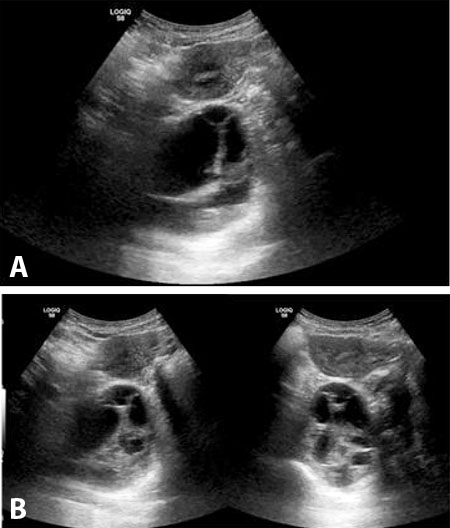
Case Report: We report the case of a 38-year-old woman diagnosed with HER2-positive, hormone receptor-positive invasive ductal carcinoma of the breast. We discovered a pregnancy at 25 weeks of gestation, while neoadjuvant chemotherapy, including trastuzumab and pertuzumab, had already been initiated. The first ultrasound revealed anhydramnios with unremarkable fetal renal morphology. From the diagnosis, anti-HER2 therapy was discontinued, but the weekly paclitaxel was continued. At 33 weeks, severe renal and pulmonary hypoplasia were detected. However, partial reversal of anhydramnios was observed by 36 weeks. The patient delivered at 38 weeks a male infant with early respiratory distress and suspected pulmonary hypertension, but with preserved renal function. The infant was discharged in good condition. The mother achieved a complete pathological response and remains in remission one year after pregnancy diagnosis.
Conclusion: The use of anti-HER2 therapy during pregnancy, particularly in the second and third trimesters, is associated with significant fetal risks. These risks may exhibit partial reversibility after drug cessation. Early pregnancy detection and individualized treatment planning are essential to optimize the maternal and neonatal outcomes.
Keywords: Anhydramnios, Breast cancer, Pertuzumab, Pregnancy, Target therapy, Trastuzumab
SUPPORTING INFORMATION
Author Contributions
Marie Dieudonné - Substantial contributions to conception and design, Acquisition of data, Analysis of data, Interpretation of data, Drafting the article, Final approval of the version to be published
Patricia Steenhaut - Substantial contributions to conception and design, Interpretation of data, Revising it critically for important intellectual content, Final approval of the version to be published
Frank Cornelis - Interpretation of data, Revising it critically for important intellectual content, Final approval of the version to be published
François Duhoux - Interpretation of data, Revising it critically for important intellectual content, Final approval of the version to be published
Sandy Van Nieuwenhove - Interpretation of data, Revising it critically for important intellectual content, Final approval of the version to be published
Martine Berlière - Substantial contributions to conception and design, Acquisition of data, Analysis of data, Interpretation of data, Drafting the article, Revising it critically for important intellectual content, Final approval of the version to be published
Guaranter of SubmissionThe corresponding author is the guarantor of submission.
Source of SupportNone
Consent StatementWritten informed consent was obtained from the patient for publication of this article.
Data AvailabilityAll relevant data are within the paper and its Supporting Information files.
Conflict of InterestAuthors declare no conflict of interest.
Copyright© 2025 Marie Dieudonné et al. This article is distributed under the terms of Creative Commons Attribution License which permits unrestricted use, distribution and reproduction in any medium provided the original author(s) and original publisher are properly credited. Please see the copyright policy on the journal website for more information.