|
Case Report
Twin gestation with complete molar pregnancy and coexisting normal fetus: Case report
1 Fellow in High-risk Pregnancy, Obstetrics and Gynecology, Rainbow Children’s Hospital, Bangalore, Karnataka, India
2 Head of Department, Obstetrics and Gynecology, Rainbow Children’s Hospital, Bangalore, Karnataka, India
Address correspondence to:
Hansa Bharodiya
Rainbow Children’s Hospital, Marthahalli, Bangalore 560037, Karnataka,
India
Message to Corresponding Author
Article ID: 100230Z08HB2026
Access full text article on other devices

Access PDF of article on other devices

How to cite this article
Bharodiya H, Shenoi P. Twin gestation with complete molar pregnancy and coexisting normal fetus: Case report. J Case Rep Images Obstet Gynecol 2026;12(1):45–48.ABSTRACT
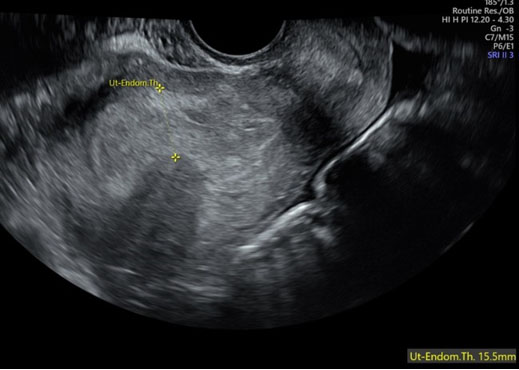
Twin pregnancy consisting of a complete hydatidiform mole with a coexisting normal fetus is an extremely rare obstetric condition and presents significant diagnostic and management challenges. These pregnancies are associated with markedly elevated β-human chorionic gonadotropin (β-hCG) levels and increased maternal risks including hemorrhage, preeclampsia, thyrotoxicosis, and development of gestational trophoblastic neoplasia. Early identification through ultrasound and biochemical markers is essential for appropriate counselling and management. A case of complete molar pregnancy with a coexisting fetus was diagnosed at 21 weeks during a routine anomaly scan. Termination of pregnancy was considered after detailed counseling due to maternal and fetal risk. Histopathological examination confirmed the diagnosis of a complete hydatidiform mole with a separate normal placenta. This case highlights the importance of antenatal imaging, multidisciplinary counseling, and close follow-up with serial β-hCG monitoring.
Keywords: β-hCG, Coexisting normal fetus, Complete hydatidiform mole, Gestational trophoblastic disease, Twin pregnancy, Ultrasound
SUPPORTING INFORMATION
Acknowledgments
We would like to sincerely thank Dr. Aruna for her valuable guidance and support throughout this case. We are also grateful to the patient for her cooperation and consent, which made this work possible. We extend our appreciation to the staff nurses for their dedicated care, assistance, and support during the management of this case. We acknowledge the use of ChatGPT (OpenAI, GPT-5.3) for language editing and manuscript structuring. All content was reviewed and approved by the authors.
Author ContributionsHansa Bharodiya - Substantial contributions to conception and design, Acquisition of data, Analysis of data, Drafting the article, Revising it critically for important intellectual content, Final approval of the version to be published
Praveena Shenoi - Analysis of data, Interpretation of data, Revising it critically for important intellectual content, Final approval of the version to be published
Guaranter of SubmissionThe corresponding author is the guarantor of submission.
Source of SupportNone
Consent StatementWritten informed consent was obtained from the patient for publication of this article.
Data AvailabilityAll relevant data are within the paper and its Supporting Information files.
Conflict of InterestAuthors declare no conflict of interest.
Copyright© 2026 Hansa Bharodiya et al. This article is distributed under the terms of Creative Commons Attribution License which permits unrestricted use, distribution and reproduction in any medium provided the original author(s) and original publisher are properly credited. Please see the copyright policy on the journal website for more information.